

释放双眼,带上耳机,听听看~!
欢迎来到今天的数据结构教程!二叉树遍历是算法面试的必考题,也是实际开发中的基础技能。
一、二叉树基础
1.1 树的定义
二叉树是每个节点最多有两个子节点的树结构:
struct TreeNode {
    int val;
struct TreeNode ... 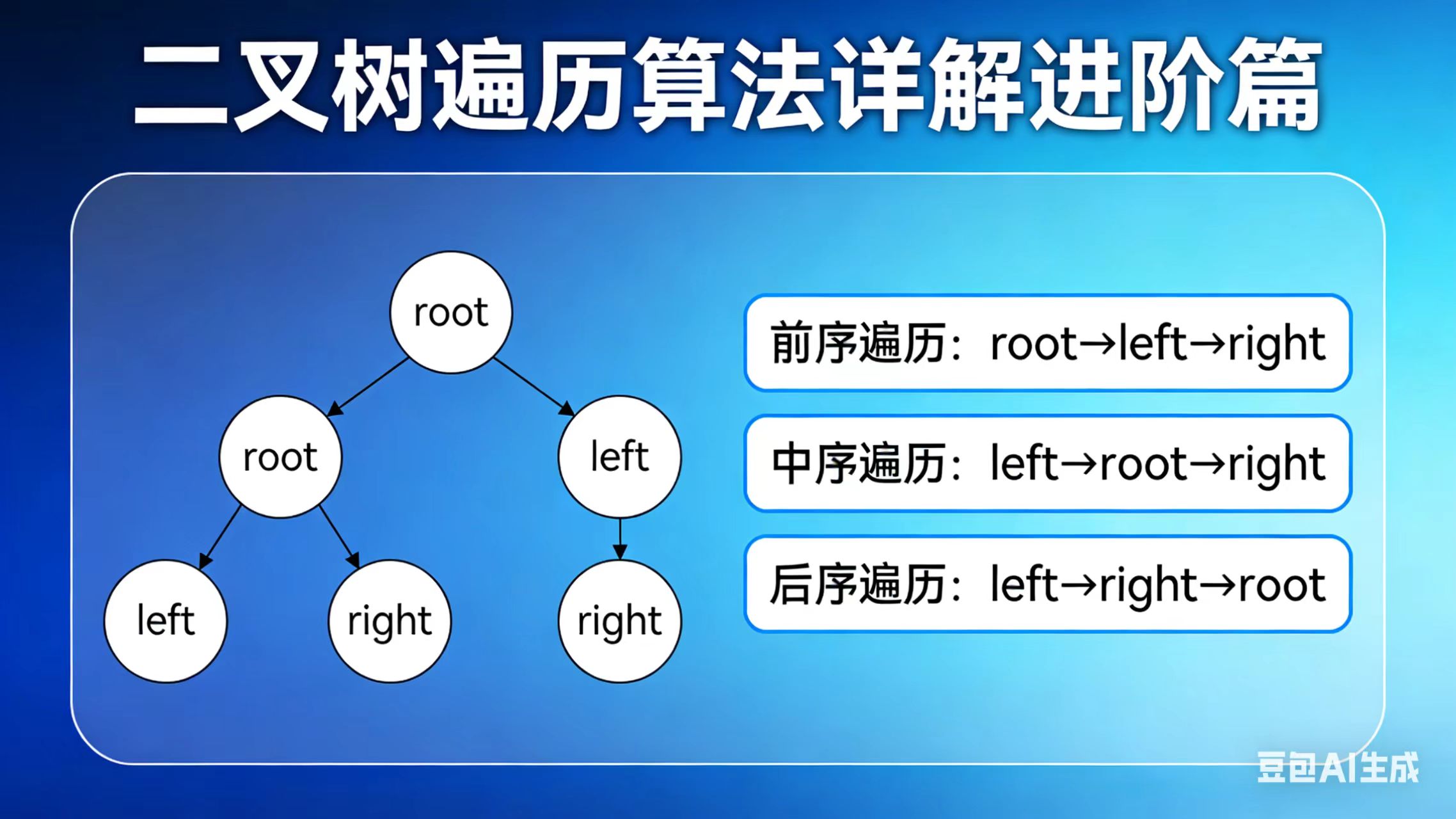
欢迎来到今天的数据结构教程!二叉树遍历是算法面试的必考题,也是实际开发中的基础技能。
一、二叉树基础
1.1 树的定义
二叉树是每个节点最多有两个子节点的树结构:
struct TreeNode {
    int val;
    struct TreeNode *left;
    struct TreeNode *right;
};
1.2 创建节点
struct TreeNode* createNode(int val) {
    struct TreeNode* node = (struct TreeNode*)malloc(sizeof(struct TreeNode));
    node->val = val;
    node->left = NULL;
    node->right = NULL;
    return node;
}
二、前序遍历(Preorder)
2.1 遍历顺序
根节点 → 左子树 → 右子树
2.2 递归实现
void preorderRecursive(struct TreeNode* root) {
    if (root == NULL) return;

    printf("%d ", root->val);           // 访问根节点
    preorderRecursive(root->left);      // 遍历左子树
    preorderRecursive(root->right);     // 遍历右子树
}

// 示例:
//       1
//      / \
//     2   3
//    / \
//   4   5
// 输出:1 2 4 5 3
2.3 迭代实现(使用栈)
#include <stdlib.h>

void preorderIterative(struct TreeNode* root) {
    if (root == NULL) return;

    struct TreeNode* stack[100];
    int top = -1;

    stack[++top] = root;

    while (top >= 0) {
        struct TreeNode* node = stack[top--];
        printf("%d ", node->val);

        // 先压右子树。后压左子树(栈是 LIFO)
        if (node->right) stack[++top] = node->right;
        if (node->left) stack[++top] = node->left;
    }
}
三、中序遍历(Inorder)
3.1 遍历顺序
左子树 → 根节点 → 右子树
3.2 递归实现
void inorderRecursive(struct TreeNode* root) {
    if (root == NULL) return;

    inorderRecursive(root->left);       // 遍历左子树
    printf("%d ", root->val);           // 访问根节点
    inorderRecursive(root->right);      // 遍历右子树
}

// 示例(同上树):4 2 5 1 3
// 重要:二叉搜索树的中序遍历是有序序列!
3.3 迭代实现
void inorderIterative(struct TreeNode* root) {
    struct TreeNode* stack[100];
    int top = -1;
    struct TreeNode* current = root;

    while (current != NULL || top >= 0) {
        // 一直向左
        while (current != NULL) {
            stack[++top] = current;
            current = current->left;
        }

        current = stack[top--];
        printf("%d ", current->val);
        current = current->right;
    }
}
四、后序遍历(Postorder)
4.1 遍历顺序
左子树 → 右子树 → 根节点
4.2 递归实现
void postorderRecursive(struct TreeNode* root) {
    if (root == NULL) return;

    postorderRecursive(root->left);     // 遍历左子树
    postorderRecursive(root->right);    // 遍历右子树
    printf("%d ", root->val);           // 访问根节点
}

// 示例(同上树):4 5 2 3 1
// 应用:计算树的高度、释放树的内存
4.3 迭代实现(双栈法)
void postorderIterative(struct TreeNode* root) {
    if (root == NULL) return;

    struct TreeNode* stack1[100];
    struct TreeNode* stack2[100];
    int top1 = -1, top2 = -1;

    stack1[++top1] = root;

    // 第一个栈:根→右→左
    while (top1 >= 0) {
        struct TreeNode* node = stack1[top1--];
        stack2[++top2] = node;

        if (node->left) stack1[++top1] = node->left;
        if (node->right) stack1[++top1] = node->right;
    }

    // 第二个栈:左→右→根
    while (top2 >= 0) {
        printf("%d ", stack2[top2--]->val);
    }
}
五、层序遍历(Level Order)
5.1 遍历顺序
从上到下。从左到右(使用队列)
5.2 实现代码
void levelOrder(struct TreeNode* root) {
    if (root == NULL) return;

    struct TreeNode* queue[100];
    int front = 0, rear = 0;

    queue[rear++] = root;

    while (front < rear) {
        int levelSize = rear - front;

        for (int i = 0; i < levelSize; i++) {
            struct TreeNode* node = queue[front++];
            printf("%d ", node->val);

            if (node->left) queue[rear++] = node->left;
            if (node->right) queue[rear++] = node->right;
        }
        printf("\n");  // 每层换行
    }
}

// 示例(同上树):
// 第 1 层:1
// 第 2 层:2 3
// 第 3 层:4 5
六、遍历应用
6.1 计算树的高度
int maxDepth(struct TreeNode* root) {
    if (root == NULL) return 0;

    int leftHeight = maxDepth(root->left);
    int rightHeight = maxDepth(root->right);

    return (leftHeight > rightHeight ? leftHeight : rightHeight) + 1;
}
6.2 查找节点
struct TreeNode* search(struct TreeNode* root, int val) {
    if (root == NULL) return NULL;
    if (root->val == val) return root;

    struct TreeNode* leftResult = search(root->left, val);
    if (leftResult != NULL) return leftResult;

    return search(root->right, val);
}
6.3 释放树的内存
void freeTree(struct TreeNode* root) {
    if (root == NULL) return;

    freeTree(root->left);
    freeTree(root->right);
    free(root);  // 后序遍历释放
}
七、复杂度分析
遍历方式    时间复杂度    空间复杂度
前序        O(n)         O(h)
中序        O(n)         O(h)
后序        O(n)         O(h)
层序        O(n)         O(w)

n = 节点数。h = 树高。w = 最大宽度
八、总结
二叉树遍历是数据结构的基础:
- 前序:复制树、序列化
- 中序:二叉搜索树排序
- 后序:释放内存、计算高度
- 层序:BFS、层次处理
关注我们获取更多数据结构教程!
声明:本站所有文章,如无特殊说明或标注,均来自于互联网,下载的软件和资源请在24小时之内删除,本站提供的资源只可作为下载、学习交流使用,其版权归原作者所有,其产生的任何后果均自己承担,本站不作任何责任承担,具体可查看本站免责声明。如已声明或标注原创,任何个人或组织,在未征得本站同意时,禁止复制、盗用、采集、发布本站内容到任何网站、书籍等各类媒体平台。如若本站内容侵犯了原著者的合法权益,可联系我们进行处理,客服链接:点此前往,投诉邮箱:nc08wlkj@163.com。
